Category 3 Sewage Sanitizing & Odor Removal in Killeen, TX
Extracting standing water is only half the job. Call 24/7 for hospital-grade Category 3 disinfection, HEPA air scrubbing, thermal deodorization, and final moisture verification across Killeen.
Serving Killeen (76541, 76542, 76543, 76549), Harker Heights, Nolanville, Belton, Temple, and Copperas Cove.
Key Restoration Steps Included
- EPA-registered broad-spectrum antimicrobial disinfection for Category 3 black water
- Commercial HEPA air scrubbers capturing airborne microbes and sewer particulates
- Deep odor neutralization including thermal fogging or hydroxyl treatment
- Final moisture meter verification to prevent hidden mold after sewage cleanup
Why Category 3 Sewage Requires Hospital-Grade Disinfection
Wastewater from toilets, floor drains, and main sewer lines is classified as Category 3 black water. It carries harmful bacteria, parasites, viruses, and organic solids that penetrate grout lines, concrete pores, and framing lumber.
Even after visible puddles are removed, leftover biofilm inside wall cavities and under trim keeps producing sharp sewer odors and triggers indoor mold growth in humid Central Texas weather.
Complete Disinfection & Odor Neutralization Steps
- Containment & Negative Air: Establish poly containment barriers when needed so airborne sewage particulates do not travel into clean bedrooms or HVAC returns.
- EPA-Registered Antimicrobial Application: Apply professional broad-spectrum disinfectants designed specifically for Category 3 sewage contamination across slabs, tile, and exposed framing.
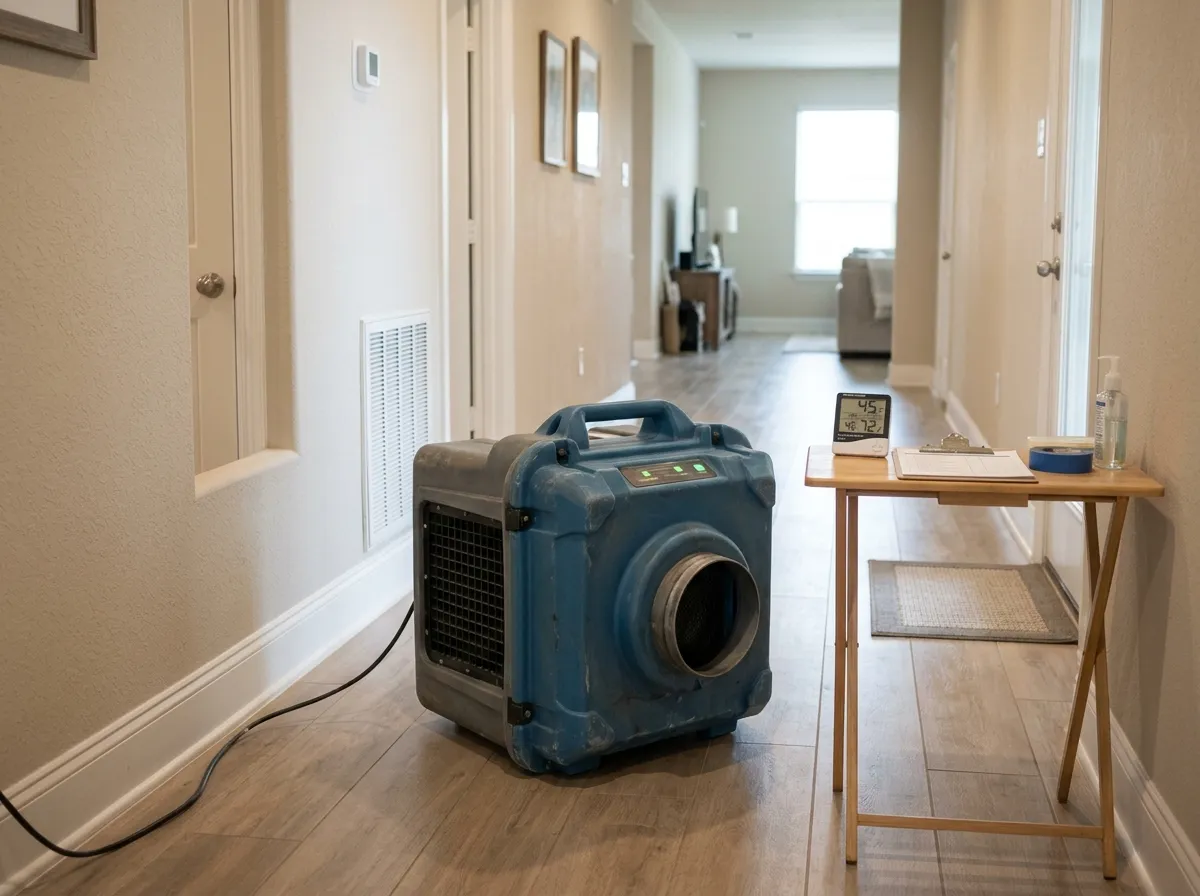
- Commercial HEPA Air Scrubbing: Run portable HEPA air scrubbers continuously to capture aerosolized contaminants and fine dust during demolition and drying.
- Source-Level Odor Neutralization: Pair antimicrobial surface cleaning with hydroxyl generators or deodorizing fog treatments that break down odor molecules instead of masking them.
- Final Moisture Verification: Confirm safe moisture and relative humidity readings before reconstruction or new flooring installation begins.
Breathe Clean Air Again
If a recent backup left lingering sewer odors or damp walls in your Killeen home, call (844) 477-0896 24/7 for complete Category 3 sanitizing and odor removal.
Four-Stage Sewage Cleanup Workflow
Raw sewage carries bacteria, viruses, and deep subfloor moisture. Proper cleanup follows four controlled restoration stages from extraction through final moisture verification.
Category 3 Extraction
Remove standing wastewater and solids using truck-mounted pumps and containment barriers so contamination stays isolated.
Material Removal & Disinfection
Strip unsalvageable carpet pad, baseboards, and soaked drywall, then apply EPA-registered antimicrobial disinfectants.
Commercial Dehumidification
Run commercial axial air movers and LGR dehumidifiers across concrete slabs, framing, and subfloors to stop mold growth.
Air Scrubbing & Moisture Check
Clear airborne sewage odors with HEPA air scrubbers and thermal fogging, then verify dry structural readings.
Need Sewage Sanitizing & Odor Removal in Killeen Right Now?
Call our 24/7 emergency line for Category 3 sewage extraction, disinfection, and structural drying across Killeen and Bell & Coryell counties.
Sewage Sanitizing & Odor Removal FAQs
Why does my house still smell like sewage after a plumber cleared the clog?
Clearing the pipe stops new wastewater from backing up, but microscopic bacteria and moisture remain absorbed in baseboards, grout, carpet tack strips, and drywall. Until those areas are sanitized and dried, the odor keeps returning.
Why are air fresheners and bleach ineffective for sewage odor removal?
Sprays only mask sewer gas temporarily, and household bleach loses potency quickly on organic waste and porous wood or concrete. True odor removal requires removing contaminated porous debris, antimicrobial treatment, and commercial air filtration.
How do technicians confirm a home is completely dry after sanitizing?
Restoration crews take daily hygrometer and pin/pinless moisture readings on concrete slabs, wall studs, and subfloors until readings match unaffected dry reference areas of the home.